LIVE SEEDS

Live Seeds and Planting Material from Mexico
Premium Tropical Seeds, Grafts, Cuttings and Nursery Stock

Spices De Gar supplies selected live seeds and planting materials from Mexico for nurseries, greenhouse operators, horticultural distributors, landscape companies, agricultural projects, and plant collectors worldwide.

Our focus is to connect international buyers with high-quality propagation materials sourced from experienced growers in Mexico’s tropical and subtropical regions.

Our Product Range

We offer a variety of planting materials, including:

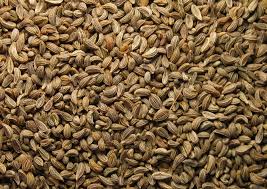
Live Seeds

Fresh seeds suitable for propagation and nursery production, including:

Monstera deliciosa
Coffee (Coffea arabica)
Citrus species
Tropical ornamentals
Native and specialty plants
Selected agroforestry species
Coffee Seeds and Seedlings

Propagation materials for commercial coffee production:

Arabica coffee seeds
Coffee seedlings
Nursery-ready plants
Specialty coffee varieties
Citrus Seeds and Grafted Plants

Propagation materials for citrus orchards and nurseries:

Persian lime
Mexican lime
Lemon varieties
Orange varieties
Rootstocks
Grafted citrus trees
Live Cuttings and Transplant Material

Vegetative propagation materials for commercial and ornamental applications:

Rooted cuttings
Unrooted cuttings
Air-layered plants
Stem sections for propagation
Transplant-ready nursery stock
Ornamental Tropical Plants

Mexico is home to a wide diversity of ornamental species with international commercial value.

Products may include:

Monstera deliciosa
Philodendron species
Tropical foliage plants
Landscape ornamentals
Decorative climbing plants
Quality and Traceability

Our objective is to provide healthy planting materials sourced from reliable growers while supporting sustainable agricultural development.

Available products may vary depending on seasonality, harvest cycles, phytosanitary requirements, and export regulations.

International Markets

We welcome inquiries from:

Nurseries
Greenhouse operators
Horticultural distributors
Landscape companies
Agricultural projects
Plant breeders
Botanical gardens
Importers and wholesalers
Phytosanitary Compliance

Certain products may require:

Phytosanitary Certificates
Import Permits
Nursery Inspections
Additional documentation according to destination-country regulations

Buyers are encouraged to verify local import requirements before placing orders.

Current Opportunities

Available products may include:

Monstera deliciosa live seeds
Coffee seeds and seedlings
Persian lime grafted trees
Citrus rootstocks
Tropical ornamental plant material
Specialty horticultural products from Mexico
Contact Us

For product availability, quotations, export requirements, and partnership opportunities, please contact:

Raymundo Hernández Ojeda
Export Sales Representative
Spices De Gar

Email: rhojeda@spicesdegar.com
Email: rhojeda@gmail.com
Website: www.spicesdegar.com
WhatsApp: +52 228 167 7003
MONSTERA DELICIOSA

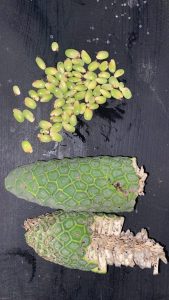
Monstera at fruit and seeds
previous arrow
next arrow

Monstera Deliciosa: One of the World’s Most Popular Tropical Ornamental Plants
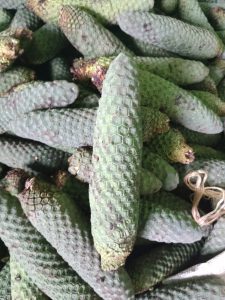
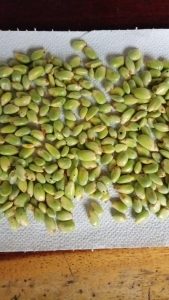
The Monstera deliciosa, commonly known as the Swiss Cheese Plant, is one of the most recognizable tropical ornamental plants in the world. Native to southern Mexico and Central America, it has become a favorite among interior designers, landscape architects, nurseries, and plant enthusiasts due to its striking foliage and adaptability.

Botanical Characteristics

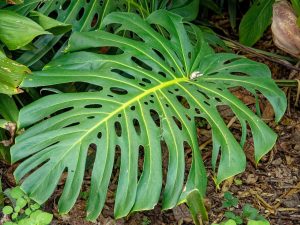
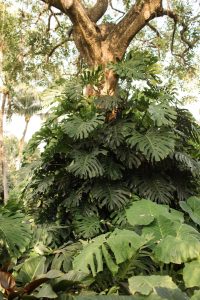
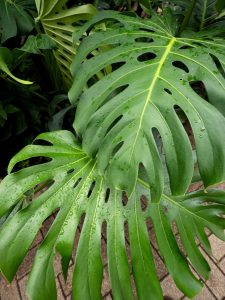
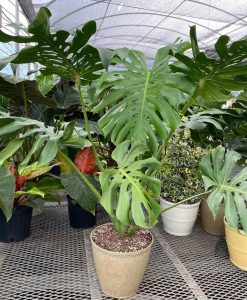
Monstera deliciosa belongs to the Araceae family and is a climbing evergreen plant that can reach impressive sizes under suitable tropical conditions. Its large, glossy leaves develop natural perforations and splits as they mature, creating the iconic appearance that has made the species famous worldwide.

Commercial Importance

Demand for Monstera deliciosa has grown significantly during the last decade, driven by:

Interior decoration trends
Urban gardening
Commercial landscaping
Greenhouse production
International ornamental plant trade

The species is widely cultivated in North America, Europe, Asia, and the Middle East.

Propagation

Monstera deliciosa can be propagated through:

Stem cuttings
Tissue culture
Air layering
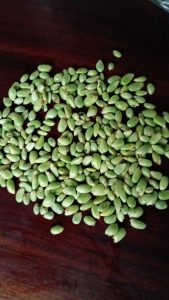
Seeds

Seed propagation is particularly important for large-scale nursery operations and genetic diversity programs.

Growing Requirements

Optimal conditions include:

Temperatures between 18°C and 30°C
High humidity
Indirect sunlight
Well-drained organic substrate
Regular irrigation without waterlogging
Uses

The plant is used for:

Indoor decoration
Tropical landscaping
Commercial office environments
Hotels and resorts
Shopping centers
Botanical gardens
International Trade Opportunities

As demand for tropical ornamental species continues to grow, Monstera deliciosa represents an attractive opportunity for nurseries, greenhouse operators, landscape companies, and horticultural distributors seeking high-value ornamental plants.

About Spices De Gar

Spices De Gar explores opportunities in agricultural and horticultural products from Mexico, connecting producers and international buyers through responsible and sustainable trade practices.

FRUITS

México es interpretado como el mítico “cuerno de la abundancia”, no sólo por su silueta, sino porque en éste país se encuentran todos los climas y suelos, lo que permite una amplia biodiversidad y oportunidades de cultivo para todas las plantas frutales.


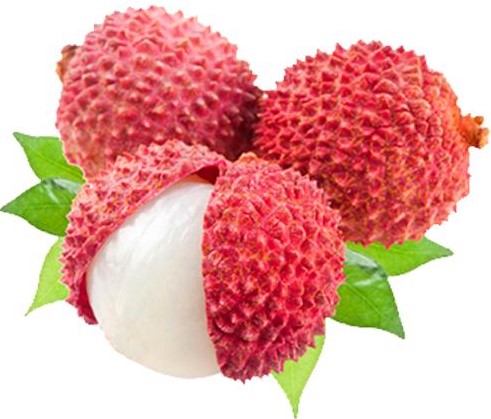
LYCHEE (LITCHI CHINENSIS)

Lychee is the sole member of the genus Litchi in the soapberry family, Sapindaceae.

It is a tropical tree native to the Guangdong and Fujian provinces of southeastern China, where cultivation is documented from the 11th century. China is the main producer of lychees, followed by India, other countries in Southeast Asia, the Indian Subcontinent, Madagascar and South Africa.

 Since the late twentieth century, Latin America has become a producer of significance.

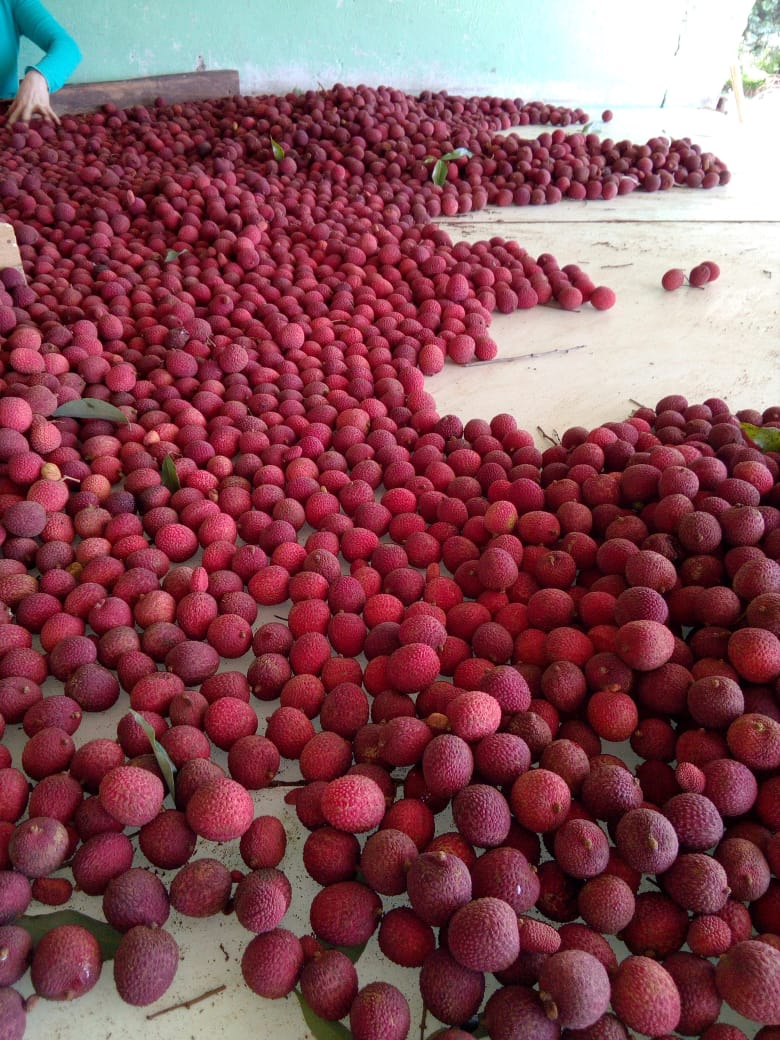
A tall evergreen tree, the lychee bears small fleshy fruits. The outside of the fruit has has a visually attractive red color and a thick, roughly textured and inedible skin covering. sweet flesh eaten in many different dessert dishes. Lychee is rich in vitamin C and essential minerals for the body. It is consumed mainly fresh, although it can also be frozen, canned and dehydrated.

The history of lychee in Mexico begins at the end of the 19th century when about 500 workers arrived from China to work temporarily on the railroads, and later they settled down to grow fruits and vegetables. 

Sinaloa was one of the states that received the most Chinese workers, there they settled and began to cultivate the lands, thus beginning the cultivation of lychee on Mexican lands. Today Sinaloa is the sixth largest producer of this fruit nationwide.

Although it is a striking and sweet fruit, it was until the 70s and 80s that lychee production became commercially established and its cultivation spread throughout the country. Currently its cultivation is carried out in 13 states of the Mexican Republic, where Veracruz, Puebla and Oaxaca are the main producers of the fruit.

Regarding its production, in 2018 more than 4 thousand hectares were destined for the cultivation of lychee, which generated almost 28 thousand 200 tons of this fruit.

Currently its cultivation is carried out in 13 states of the Mexican Republic, where Veracruz, Puebla and Oaxaca are the main producers of the fruit.


Being located in the northern highlands of the state of Puebla and adjacent to the central region of the state of Veracruz, it is natural that we contribute our agro-industrial export experience to offer you the best quality lychee for human consumption.


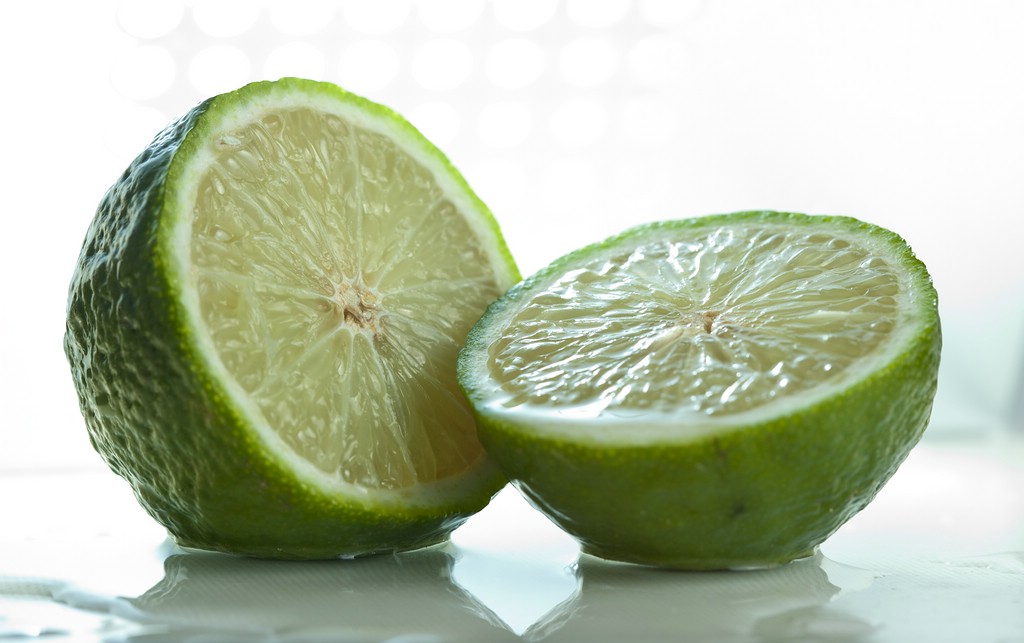
SEEDLESS LIMES (CITRUS LATIFOLIA)

Persian lime (Citrus × latifolia), is also known by other common names such as seedless lime, Bearss lime and Tahiti lime, is a citrus fruit species of hybrid origin, known only in cultivation. The Persian lime is a triploid cross between key lime (Citrus × aurantiifolia) and lemon (Citrus limon). Although there are other citrus species that are referred to as “limes”, the Persian lime is the most widely cultivated lime species commercially, and accounts for the largest share of the fruits sold as limes. The fruit turns yellow as it ripens, but it is universally sold while still green.


Seedless limes were first cultivated on a large scale during the Persian empire (in what is now Iran) when Persia was introduced into the Arab culture, the consumption of seedless lime spread to the Iberian Peninsula, from where it reached Mexico during the Spanish conquest.

By the XX Century, at the 80’s; the seedless limes production in Mexico did not reach 40,000 metric tons, that’s when it began to increase with a view to its export to the United States; By the 90’s, its production reached 90,000 tons and by the year 2000 it already reached 250,000 tons per year


Currently, seedless limes production in Mexico has the capacity to exceed 500,000 metric tons each year. And Mexican other citrus fruits production is over 2 million tons each year.


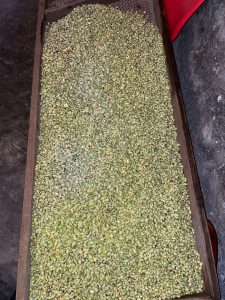
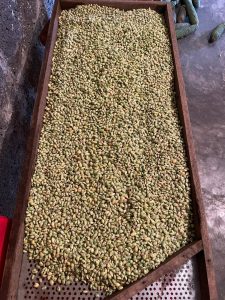
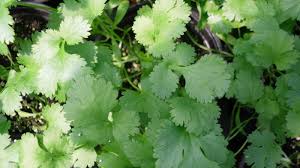
CORIANDER (CORIANDRUM SATIVUM)

Coriandrum sativum, popularly called coriander, cilantro, chinese parsley or dania, is an annual herb in the family Apiaceae. All parts of the plant are edible, but the fresh leaves and the dried seeds are the parts most traditionally used in cooking It is the only species of the genus Coriandrum, which is also the only member of the Coriandreae tribe.


Its origins seem uncertain, although it is generally considered native to northern Africa and southern Europe.


Annual plant that reaches about 40 or 60 cm in height. It has erect stems, compound leaves, white flowers and aromatic fruits. It is commonly used in Mediterranean, Indian, Latin American, Chinese and Southeast Asian cuisine. All parts of the plant are edible, but fresh leaves and dried seeds are generally used.


In Mexico its use is very extensive, it is used in the preparation of meat tacos, salads as “pico de gallo”, sauces and moles, flavoring in soups and broths, and fresh and chopped as a dressing of different types of appetizers.


Cultivation takes place in a temperate climate with temperatures between 15-18º C. in volcanic, siliceous-clay and calcareous soils. at altitudes from zero to 1,000 meters above sea level

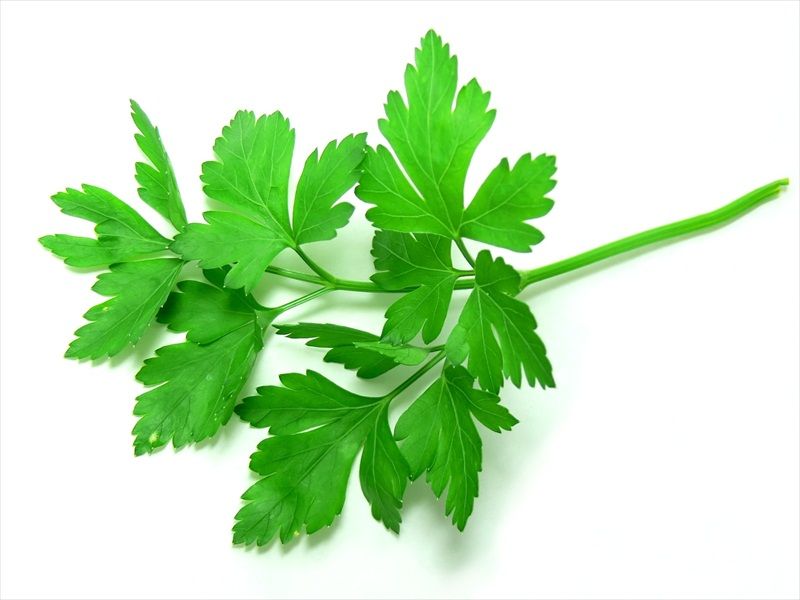
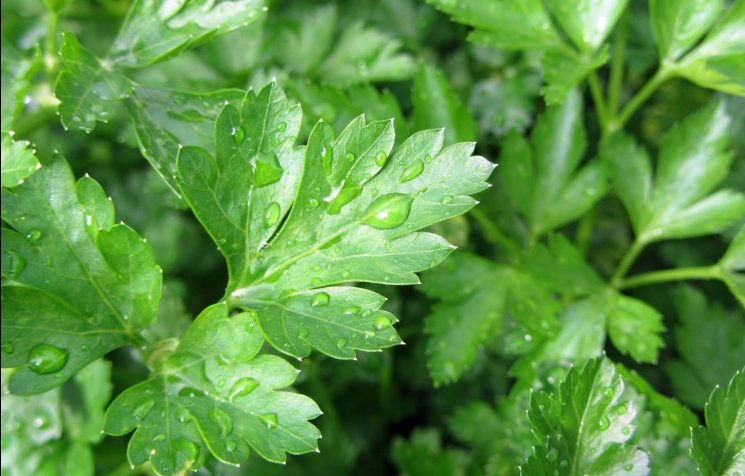
PARSLEY (PETROSELINUM CRISPUM)

Petroselinum crispum – Parsley – Perejil – Is an herbaceous plant, its cultivation has been known for more than 300 years but nowadays it is cultivated throughout the world making it an essential herb in gastronomy.

Originally from the eastern Mediterranean, it was used by Romans and Greeks for aromatic purposes in gastronomy and healing in medicine, Then called Petroselinum from the Greek πετροσέλινον (rock-celery). Gladiators used parsley as a source of cunning and strength, the Romans also used it in the form of a crown to reduce the ethyl state.


Today parsley is used as an essential ingredient of international cuisine, bringing flavor, visual appeal and all its properties to many dishes, being versatile it can be consumed raw in salads, or drink it in teas or juices, it is an excellent accompaniment to red and white meats, vegetables, seafood and fish, it also adds a touch of elegance to the dishes.

In Mexico its production amounts to more than 6,000 tons per year, being grow in moist, well-drained soils, with full sun, at temperatures between 22–30 °C. It is widely consumed as an ingredient in stews and medicinal treatments.

It grows as a biennial crop, in the first year, it forms a rosette of tripinnate leaves 10–25 cm long with numerous 1–3 cm leaflets, and a taproot used as a food store over the winter. In the second year, it grows a flowering stem to 75 cm (30 in) tall with sparser leaves and flat-topped 3–10 cm diameter umbels with numerous 2 mm diameter yellow to yellowish-green flowers. The seeds are ovoid, 2–3 mm long, with prominent style remnants at the apex.